
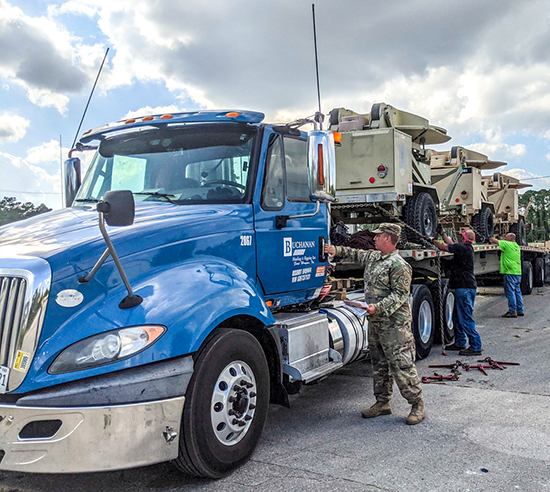
Military vehicle transport can involve freight with unusual dimensions, substantial weight, specialized loading requirements, limited ground clearance, or delivery conditions that require more planning than a standard truckload shipment. Tactical vehicles, armored vehicles, support equipment, machinery, and other defense-related freight may each require a different combination of trailer equipment, securement, routing, permits, and site coordination.
Buchanan Hauling & Rigging, Inc. provides asset-based heavy haul transportation and specialized freight services for military vehicles and equipment when the shipment requirements match Buchanan's equipment, operating authority, and transportation capabilities.
Military Vehicle and Equipment Transportation Requirements
Planning military equipment transportation starts with understanding the freight itself. A transportation team needs accurate information before selecting a trailer or building a route. Important details can include overall length, width, height, total weight, center of gravity, ground clearance, loading method, origin access, destination access, and required delivery timing.
Depending on the shipment, military and defense-related freight may include:
- Tactical and utility vehicles
- Armored vehicles and heavy vehicle platforms
- Construction and engineering equipment
- Ground support equipment
- Generators and power equipment
- Maintenance and support machinery
- Large components or unusually configured equipment
The type of freight matters because equipment that can drive onto a trailer may require a different loading plan than freight that must be lifted by crane. Height, width, weight, and ground clearance can also determine whether a standard open-deck trailer is appropriate or whether specialized heavy haul equipment is required.
Choosing the Right Trailer for Military Vehicle Transport
Trailer selection should be based on actual equipment dimensions and loading requirements rather than the name of the cargo. Buchanan's heavy haul fleet includes step decks, lowboys, removable gooseneck trailers, multi-axle configurations, extended trailer configurations, and other specialized equipment for freight that falls outside standard trailer limits.
For example, a lower deck may help manage the overall loaded height of taller equipment, while an RGN configuration can provide a front-loading option for compatible machinery. Heavier freight may require additional axle distribution, while longer equipment may require an extended trailer configuration.
Selecting the appropriate equipment requires reviewing:
- Overall freight dimensions
- Total shipment weight
- Weight distribution and center of gravity
- Ground clearance
- Loading and unloading method
- Trailer deck height and configuration
- Axle requirements
- Pickup and delivery site conditions
Shippers can learn more about Buchanan's equipment and planning capabilities on our Heavy Haul Trucking Services page.
Permits, Routing and Clearance Planning
When military equipment exceeds legal size or weight limits, the transportation plan may require oversize or overweight permits. Requirements vary by state and by shipment, so route planning should be based on the actual loaded dimensions and weight.
Depending on the load, planning may involve:
- Oversize or overweight permit coordination
- Route surveys
- Bridge and roadway reviews
- Height and width clearance considerations
- Restricted travel periods
- Pilot cars or other escorts when required
- Coordination around pickup and delivery access
These requirements should be identified before the equipment is ready to leave the origin. Early planning gives the transportation team time to evaluate the route, trailer configuration, permits, escorts, and any conditions that could affect the move.
Load Securement for Military Vehicles and Equipment
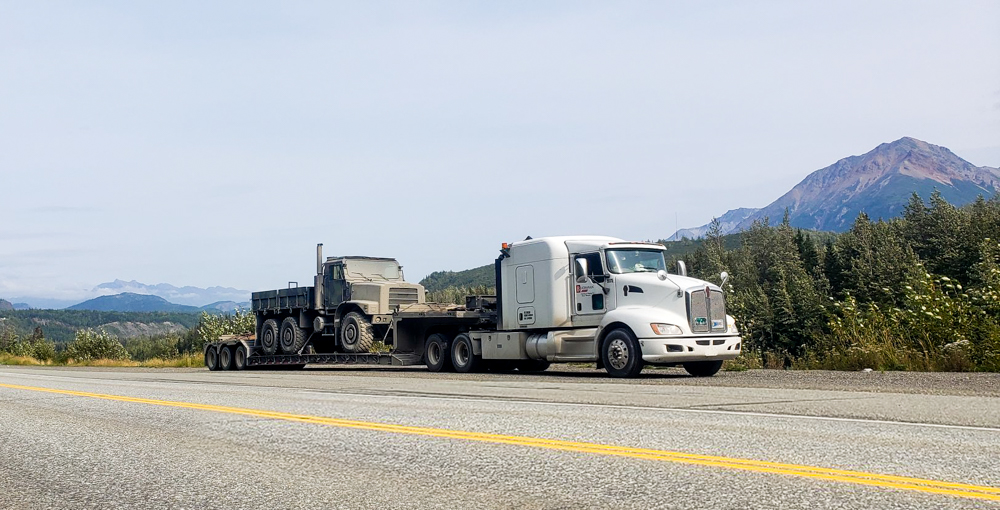
Load securement is another important part of military vehicle transportation. The securement plan must account for the size, weight, configuration, attachment points, and movement characteristics of the equipment being transported.
Drivers and operations personnel need to consider weight distribution and securement requirements before the shipment moves. The approach can vary substantially between a wheeled vehicle, tracked equipment, a generator, or a large component that must be supported at specific points.
For additional information about securement planning, read Ensuring Effective Load Securement.
Pickup and Delivery Site Requirements
A route can work on the highway and still create problems at the origin or destination. Military vehicle and heavy equipment transportation should therefore include a review of site access before the truck arrives.
Important questions can include:
- Is there enough room for the tractor and trailer to enter and maneuver?
- Will the equipment be driven, winched, or lifted onto the trailer?
- Is a crane or other loading equipment required?
- Are there gates, overhead restrictions, pavement limitations, or tight turns?
- Is there enough space to unload the equipment at the destination?
- Does the pickup or delivery require a specific appointment or access window?
Providing this information early helps the transportation team determine whether the selected trailer, loading plan, and route are appropriate for the complete shipment rather than only the highway portion of the move.
Communication During a Military Equipment Move
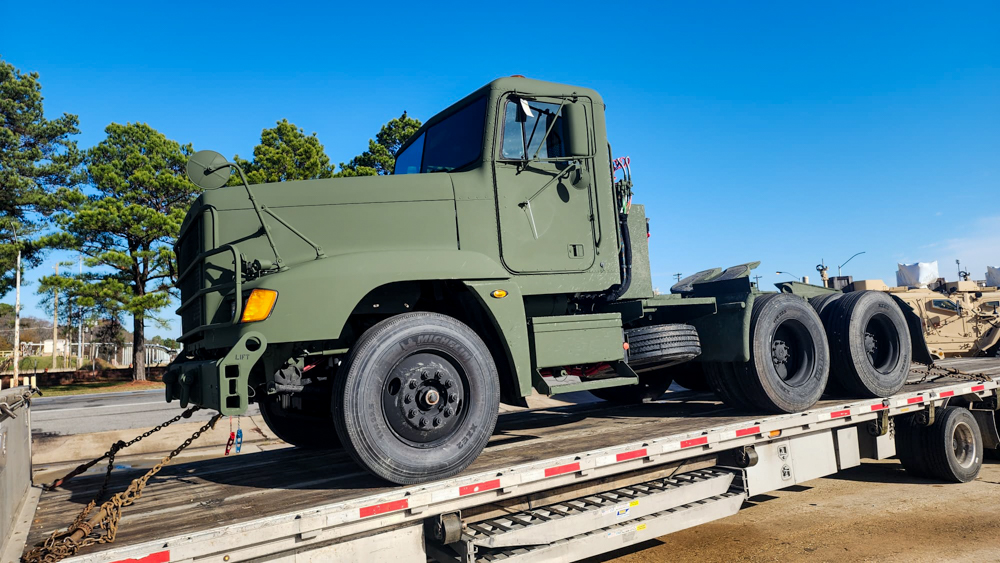
Large or specialized shipments can involve drivers, dispatch, permit personnel, escorts, loading crews, receiving personnel, and customer contacts. Clear communication between those parties becomes especially important when appointment times, loading conditions, routes, or project schedules change.
Buchanan's heavy haul planning process can include coordination of equipment selection, securement, permits, routing, escorts when required, and communication from pickup through delivery. For a military vehicle or equipment shipment, the exact process depends on the freight and the requirements provided by the customer.
Security, Documentation and Shipment-Specific Requirements
Some military or defense-related shipments can be subject to additional documentation, access, security, contractual, or commodity-specific requirements. Those requirements are not the same for every shipment and should be identified by the shipper before transportation is scheduled.
Customers should provide Buchanan with any transportation-related instructions or documentation requirements that apply to the specific shipment so the team can determine whether the load falls within Buchanan's available services and operating capabilities. Requirements involving controlled information, restricted commodities, facility access, or other specialized obligations should be addressed before tendering the shipment rather than assumed to apply to every military load.
Asset-Based Heavy Haul Equipment for Demanding Freight
Buchanan Hauling & Rigging was founded in 1996 and operates an asset-based transportation fleet supporting dry van, flatbed, expedited, specialized, and heavy haul freight. Buchanan's heavy haul equipment includes configurations designed for long, tall, wide, and heavy freight that cannot move on a standard trailer.
Available heavy haul equipment includes:
- Step deck and lowboy trailers
- Removable gooseneck configurations
- Multi-axle trailer configurations
- Extended trailer configurations
- Jeeps and stingers for additional axle distribution
- Steerable specialized trailer equipment
- Other heavy haul configurations based on project requirements
The equipment alone does not determine whether a shipment can move. Dimensions, weight, loading conditions, route restrictions, permits, delivery requirements, and current equipment availability all need to be reviewed together.
Military Vehicle Transportation Across the United States
Buchanan provides heavy haul and specialized freight transportation throughout the continental United States. Operating locations in Indiana, Arizona, Pennsylvania, and Texas support freight movement across major transportation regions and corridors.
Visit the Buchanan Hauling Locations page for information about our Fort Wayne, Indianapolis, Phoenix, Trafford, and Houston locations.
When a Military Shipment Requires More Transportation Coordination
Some equipment moves are part of a larger transportation project involving multiple shipments, delivery sequences, changing schedules, or additional capacity. Buchanan Hauling's in-house 3PL managed logistics services can provide additional transportation coordination when the requirements extend beyond a single asset-based shipment.
For more information about planning larger or multi-stage freight movements, read our Project Transportation Management article.
Planning a Military Vehicle or Equipment Shipment
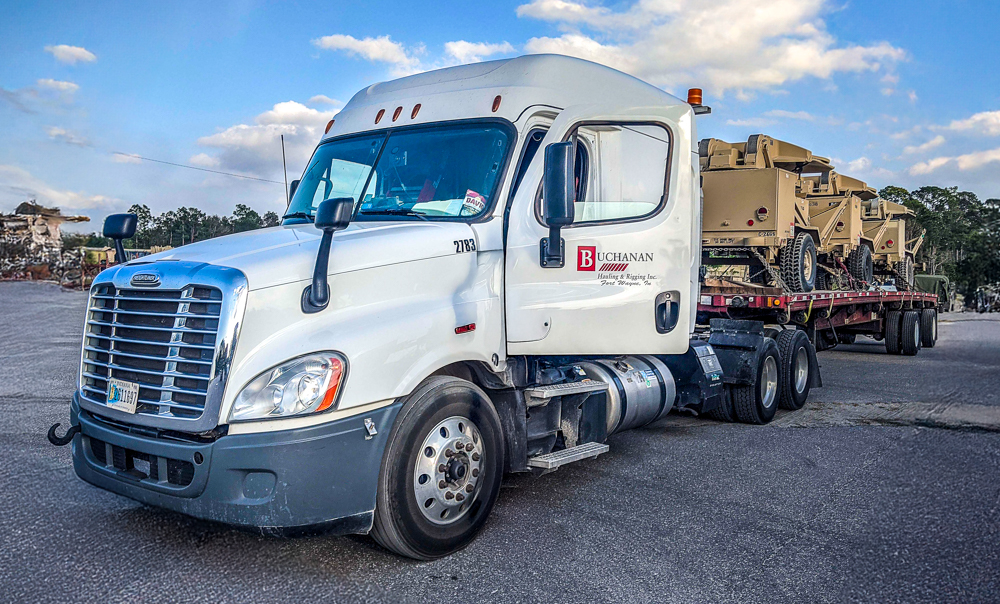
Organizations that need to transport military vehicles or other large defense-related equipment should provide detailed shipment information as early as possible. Accurate information allows Buchanan to determine whether the freight matches available equipment and to identify planning requirements before the shipment is scheduled.
Helpful information includes:
- Commodity or equipment description
- Length, width, and height
- Total weight
- Origin and destination
- Requested pickup and delivery dates
- Loading and unloading methods
- Ground clearance when applicable
- Site access requirements
- Any shipment-specific transportation instructions
Buchanan can then review the freight for the appropriate heavy haul or specialized transportation option.
Have a military vehicle or specialized equipment shipment to plan?
Related Heavy Haul and Specialized Freight Resources
Ensuring Effective Load Securement | Project Transportation Management | The Right Way to Move Construction Equipment | Heavy Haul Trucking Services | Specialized Freight Transportation