
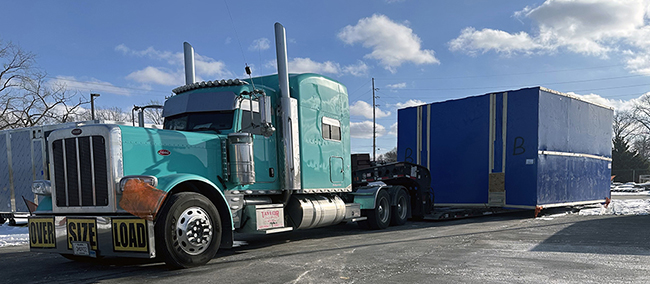
How manufacturers, machine shops, equipment dealers, and plant teams can prepare CNC machines and machine tools for transportation.
CNC machine transport requires accurate equipment information, the right trailer, a defined loading method, and careful planning at both the pickup and delivery locations. Machining centers, lathes, mills, grinders, and other machine tools can be heavy, tall, compact, or difficult to load with standard dock equipment. The transportation plan should begin with the machine's actual shipping dimensions, weight, ground clearance, lifting points, and final shipping configuration.
Buchanan Hauling & Rigging, Inc. is an asset-based trucking company that transports industrial machinery, production equipment, heavy presses, and other specialized freight. Businesses planning CNC machinery transportation can have Buchanan review the shipment through its Specialized Freight Transportation and Heavy Haul Trucking capabilities, depending on the size, weight, loading method, and route.
What Types of Machine Tools May Need Specialized Transportation?
Machine tool transport can involve many different types of manufacturing equipment. Each machine should be reviewed using its own specifications rather than assuming that similar machines will use the same trailer or loading plan.
Common machine shop equipment may include:
- CNC machining centers
- CNC lathes and turning centers
- Vertical and horizontal mills
- Boring mills
- Grinding machines
- Electrical discharge machines
- Laser or cutting equipment
- Toolroom machinery
- Inspection or measuring equipment
- Other production and machine-shop equipment
The machine type is only the starting point. A carrier still needs the actual shipping dimensions, weight, loading method, access conditions, and delivery requirements before selecting equipment.
Start With the Machine's Shipping Dimensions
For CNC machine transport, use the dimensions of the equipment as it will actually travel. Operating dimensions may be different from shipping dimensions if guards, conveyors, electrical cabinets, chip systems, control panels, platforms, or other components are removed before pickup.
Confirm:
- Overall shipping length
- Overall shipping width
- Overall shipping height
- Ground clearance
- Dimensions of removable components
- Dimensions of separate crates or accessories
- Any protrusions that remain attached during transportation
These dimensions can affect deck height, trailer selection, permit requirements, clearances, and route planning. A machine that fits one trailer by weight may require another configuration because of height or loading conditions.
Verify the Machine Weight
Accurate weight information is just as important as dimensions. Machine tools can place substantial weight within a relatively compact footprint, so trailer capacity and weight distribution must be evaluated using reliable specifications.
Provide:
- Total shipping weight
- Weight of separately shipped components
- Center of gravity information when available
- Manufacturer weight documentation when available
- Information about any tooling or accessories that remain with the machine
If the final weight is still being confirmed, identify the figure as an estimate. Update the carrier before dispatch if the final shipping weight differs from the original information.
Follow Manufacturer Handling Instructions
Machine tools can have manufacturer-specific requirements for lifting, supporting, blocking, or preparing the equipment for transportation. Those instructions should be provided to the loading team and carrier when they are available.
Useful information can include:
- Approved lifting points
- Approved forklift pockets or lifting locations
- Required support points
- Center of gravity markings
- Required shipping orientation
- Instructions for securing machine axes or moving components
- Instructions for removing or securing accessories
The carrier should not be expected to guess where a machine can be lifted or supported. Manufacturer drawings, rigging diagrams, and transportation instructions can help the project team establish the correct loading and support plan before the truck arrives.
Choose the Trailer Around the Machine
There is no single trailer used for every CNC machine or machine tool. The correct equipment depends on the machine's height, weight, footprint, ground clearance, loading method, and route.
Possible equipment may include:
- Flatbed trailers for open-deck machinery that fits conventional dimensions and weight
- Step deck trailers when additional loaded-height clearance is useful
- Lowboy equipment for taller or heavier machinery
- RGN trailers when lower deck height or drive-on loading capabilities fit the machine
- Multi-axle heavy haul configurations for equipment requiring additional weight distribution
Buchanan's Heavy Haul fleet includes step deck and lowboy equipment, multi-axle configurations, extended trailers, specialized RGNs, jeeps, stingers, steerable equipment, and other configurations for large or unusually configured freight. The equipment should be selected from the machine specifications rather than from the equipment name alone.
Plan the Loading Method Before Dispatch
CNC machinery transportation often depends on how the machine will be transferred onto the trailer. The loading plan should be established before the carrier dispatches equipment to the origin.
Possible loading methods can include:
- Crane loading
- Forklift loading when the machine and facility support it
- Rigging systems
- Jacking and skidding
- Drive-on loading for equipment designed to move that way
- Other manufacturer-approved methods
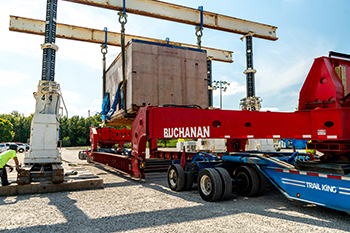
Confirm who is responsible for loading and which contractor or facility team will provide the lifting or rigging equipment. Buchanan's Heavy Haul capabilities include crane and rigging coordination when those services need to be integrated with the transportation plan.
Protect Controls, Accessories, and Separate Components
CNC machines may include control panels, cabinets, chip conveyors, coolant systems, tooling, guards, platforms, and other components that can affect transportation. The shipper and equipment specialist should determine what stays attached, what is secured, and what travels separately.
Before pickup, identify:
- Components that will be removed
- Separate crates or accessory loads
- Loose tooling or parts
- Control cabinets or panels that travel separately
- Any components that change the final height or width
- Special handling instructions from the manufacturer or equipment service provider
Separate components should be included in the quote information. They can affect deck space, trailer count, loading time, and delivery sequencing.
Machine Shop Access Can Be as Important as Highway Routing
A machine may fit the trailer and highway route but still be difficult to reach inside a manufacturing facility or machine shop. Origin and destination access should be reviewed before equipment is dispatched.
Check:
- Gate and driveway width
- Turning room
- Building door height and width
- Interior loading position
- Overhead obstructions
- Dock or floor conditions
- Trailer staging space
- Crane or forklift positioning
- Facility traffic restrictions
- Security and appointment requirements
Photos and facility drawings can help the transportation team understand the approach. If the machine must be moved through a building before it reaches the truck, the shipper should coordinate that internal move with the rigging or equipment-handling team separately from the highway transportation plan.
Plan the Delivery Location Before the Machine Leaves
The receiving facility should know where the truck will be positioned and how the machine will be unloaded before the shipment leaves the origin. This becomes more important when the machine is moving into a tight production area or an active manufacturing facility.
Confirm:
- Who will unload the machine
- What crane, forklift, or rigging equipment will be available
- Where the trailer will stage
- Whether the machine will be placed into final position or moved to a staging area
- Delivery appointment times
- Building access restrictions
- Whether installation crews are working from a specific sequence
Transportation ends when the freight reaches the agreed delivery point, but the project may continue with rigging, positioning, installation, leveling, electrical work, or commissioning. Those responsibilities should be assigned before the move begins.
When CNC Machine Transport Requires Permits
Some machine tools fit within standard legal transportation limits. Others may require oversize or overweight permits because of loaded dimensions or weight.
Permit and route planning can depend on:
- Overall loaded width
- Overall loaded height
- Total combination length
- Gross and axle weights
- Bridge restrictions
- Overhead clearances
- Restricted travel periods
- Escort requirements
Buchanan coordinates applicable oversize and overweight permits, route planning, route surveys, and escort requirements for heavy haul projects. For more detail, review Buchanan's Heavy Haul Permits and Route Planning resource.
Single Machine Move or Larger Plant Project?
A CNC machine may move as a single equipment shipment or as part of a larger production-line relocation, plant expansion, or facility move. The transportation plan should reflect the size of the project.
For a single machine, the focus may be on:
- Machine dimensions and weight
- Trailer selection
- Loading and unloading
- Pickup and delivery access
- Permits when required
For a multi-machine project, the plan may also need:
- Equipment identification numbers
- Multiple trailer assignments
- Loading sequence
- Delivery sequence
- Truck staging
- Crane and rigging schedules
- Installation dependencies
Buchanan's broader Heavy Machinery Equipment Hauling article covers industrial equipment transportation at a higher level. This CNC machine transport resource focuses specifically on the requirements of machine tools and machine-shop equipment.
Buchanan's Experience With Heavy Manufacturing Equipment
Buchanan Hauling & Rigging has operated as an asset-based trucking company since 1996. Its Heavy Haul Division supports industrial machinery, production equipment, heavy presses, and other oversized or overweight manufacturing freight.
Buchanan also has documented experience moving heavy manufacturing machinery. In 2025, Buchanan transported a Simpac Press from Louisville, Kentucky, to Bardstown, Kentucky. The published project shows trailer preparation, truck positioning, crane loading, and transportation of the press.
A stamping press is not a CNC machine, but the project provides first-party evidence of Buchanan's experience handling heavy manufacturing equipment that requires specialized trailer planning and coordinated loading. Shippers can view the Simpac Press transport video or browse more completed work in the Buchanan Hauling Transportation Project Gallery.
Why Asset-Based Capacity Matters for Machine Tool Transport
CNC machine transport can require a specific trailer rather than simply any available truck. Buchanan operates as an asset-based carrier, giving its transportation teams direct access to company equipment and operations for freight that fits Buchanan's capabilities.
Buchanan's broader transportation operation supports flatbed, specialized, heavy haul, dry van, expedited, and other freight services. For machine tools that require open-deck or specialized equipment, Buchanan can review the dimensions, weight, loading method, and route to determine which service and trailer configuration may fit the shipment.
Learn more about Buchanan's operating background on the About Buchanan page.
What to Provide for a CNC Machine Transport Quote
Machine shops, manufacturers, equipment dealers, auction buyers, plant managers, and project contractors can help Buchanan evaluate a machine move by providing accurate information at the start.
Include:
- Machine type
- Manufacturer and model
- Shipping length, width, and height
- Total shipping weight
- Ground clearance
- Center of gravity information when available
- Approved lifting or support information
- Origin and destination addresses
- Requested pickup and delivery dates
- Loading and unloading methods
- Separate components or accessories
- Site-access information
- Crane or rigging requirements
- Photos, drawings, or manufacturer specifications
If the machine will be partially disassembled for transportation, include the dimensions and weight of each separate component. If any specifications are still preliminary, identify them as estimates.
Plan a CNC Machine Move With Buchanan
If your business needs CNC machine transport, machine tool transport, lathe transport, milling machine transport, or transportation for other machine-shop equipment, Buchanan can review the shipment against its asset-based specialized and heavy haul capabilities.
Use Buchanan's Rate Quote page to send the machine specifications, dimensions, weight, origin, destination, loading method, requested dates, and site information. Those details give the transportation team the information needed to evaluate equipment and planning requirements.
Have a CNC machine, lathe, mill, machining center, or other machine tool to move? Send the shipment details to Buchanan Hauling & Rigging for review.