
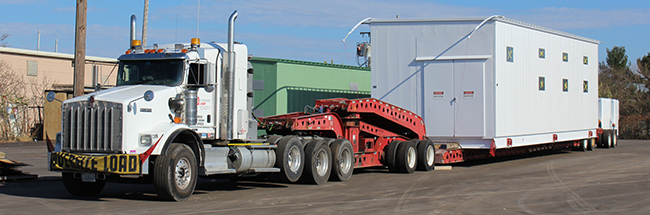
How contractors, manufacturers, developers, and project teams can prepare modular buildings and prefabricated structures for highway transportation and jobsite delivery.
Modular building transport starts with the shipping dimensions, weight, construction of each unit, loading method, route, and delivery site. A prefabricated structure may leave the manufacturing facility as a large finished module, a partially completed building section, or a component that will be joined with other units at the project site. Each configuration creates its own transportation requirements.
Buchanan Hauling & Rigging, Inc. is an asset-based trucking company providing heavy haul transportation and specialized freight transportation for oversized, overweight, and unusually configured freight. For modular construction transport, the first step is determining whether the structure's confirmed dimensions, weight, loading method, route, and site conditions fit the equipment and project-planning capabilities available for the move.
What Makes Modular Building Transport Different?
A modular structure is not standard truckload freight. Width, height, length, weight, structural support points, and the way the module is loaded can all affect trailer selection and routing. Finished exterior surfaces, rooflines, overhangs, attached components, and other features may also change the final transportation dimensions.
Before transportation planning begins, shippers should confirm:
- Overall shipping length, width, and height of each module
- Total weight of each unit
- Approved lifting and support points
- Required transportation orientation
- Ground clearance and underside conditions
- Roof, wall, or exterior components that affect dimensions
- Removable features that may reduce shipping width or height
- Loading and unloading methods
- Origin access and staging conditions
- Jobsite access, crane location, and unloading sequence
For multi-unit projects, each module should be identified separately. Similar-looking units can have different weights, dimensions, or delivery positions, and those differences may affect the trailer configuration, permit, or delivery order.
Trailer Selection for Prefabricated Buildings
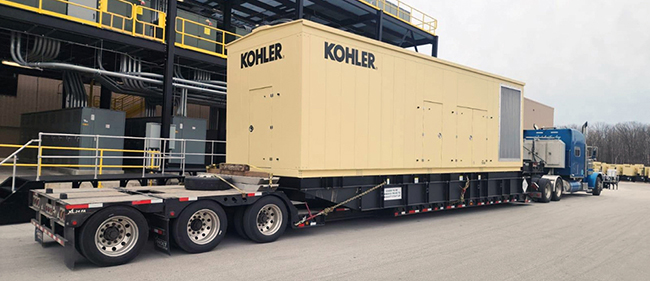
There is no single trailer used for every modular building. Trailer selection depends on the structure's dimensions, weight, ground clearance, support requirements, loading method, and route.
Buchanan's published heavy haul equipment includes extended trailer configurations for long and oversized freight, step deck and lowboy equipment for loads requiring reduced deck height, multi-axle configurations for heavier freight, 12- and 13-axle RGNs, steerable equipment, and other specialized configurations.
For a tall prefabricated building, deck height may be an important consideration because the module itself can create substantial overall loaded height. A long modular unit may place more emphasis on trailer length, turning space, rear swing, and route geometry. Heavier structures may require additional attention to axle loading and weight distribution.
The correct equipment should be selected from the confirmed shipping profile rather than from the general description of the structure. Buchanan's Heavy Haul Trucking Services page provides additional information on equipment used for oversized and overweight freight.
Loaded Dimensions Drive Route and Permit Planning
The dimensions of the building are only part of the transportation profile. The carrier also needs to account for the trailer and the final loaded configuration. Overall height, width, length, gross weight, and axle weights can determine which permits and routes apply.
An oversized module may require:
- Oversize or overweight permits
- Route reviews or route surveys
- Bridge and roadway evaluation
- Overhead-clearance review
- Escort or pilot vehicles
- Restricted travel times
- Special coordination near the origin or project site
Requirements vary by state, route, and shipment. Buchanan coordinates applicable oversize and overweight permits, route planning, route surveys, and escort requirements for heavy haul projects when those services are needed.
Shippers can learn more in Buchanan's Heavy Haul Permits and Route Planning resource and use the U.S. Truck Weight Limits by State Reference Guide for general planning information.
Jobsite Access Can Determine Whether the Delivery Plan Works
The final miles of modular building transportation can be as important as the highway route. A permitted route may reach the project property but still leave a difficult turn, narrow entrance, overhead obstruction, soft surface, limited staging area, or restricted crane position between the roadway and the unloading point.
Before dispatch, project teams should review:
- Entrance dimensions. Confirm gate width, driveway width, turning space, and any temporary barriers.
- Overhead clearance. Identify utility lines, trees, signs, bridges, pipes, structures, and other overhead restrictions.
- Ground conditions. Determine whether the truck will travel on pavement, gravel, compacted surfaces, or temporary access roads.
- Staging room. Confirm where trucks can wait without interfering with construction activity or public traffic.
- Crane and unloading position. Make sure the trailer can reach the location needed for the planned lift or unloading method.
- Exit path. Plan how the tractor and trailer will leave after the module has been unloaded.
Buchanan's published project transportation guidance emphasizes site surveys and access review for project freight because the legal route to a property does not always establish that the truck can reach the final unloading point.
Multi-Unit Modular Projects Need Delivery Sequencing
Modular construction projects may involve several building units moving from a fabrication facility to the same jobsite. When modules must be installed in a specific order, the transportation schedule should follow the construction sequence.
The project team should identify:
- Which module is needed first
- How each unit is labeled or numbered
- Whether trucks will load in installation order
- Where trucks can stage near the project
- When the crane or unloading crew will be available
- How much time is available between deliveries
- What happens if site conditions or installation timing changes
A sequence that works at the fabrication facility may not work at the jobsite. The transportation plan should connect production readiness, truck scheduling, staging space, crane availability, and installation order so each party is working from the same delivery sequence.
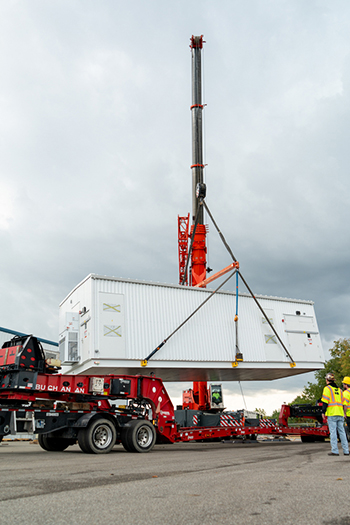
Loading and Unloading Modular Structures
The loading method should be known before trailer selection is finalized. Depending on the structure and facility, loading may involve cranes, lifting frames, jacking systems, or other equipment supplied by the shipper, manufacturer, or project team.
The carrier should receive information about approved support points and loading conditions before the truck arrives. The same applies at delivery. A project site that plans to use a crane should confirm where the truck will be positioned, how the module will be accessed, and whether the unloading sequence matches the construction plan.
Buchanan's Heavy Haul capabilities include crane and rigging coordination when those services need to be integrated with transportation planning. The specific loading and unloading responsibilities should be established for each shipment before movement begins.
Protecting the Project Schedule
A modular building may be one piece of a larger construction schedule involving fabrication, site work, foundations, utilities, cranes, installation crews, inspections, and other contractors. Transportation dates should reflect when the module is actually ready at the origin and when the project site is actually ready to receive it.
Project teams should communicate changes that could affect:
- Module completion dates
- Final dimensions or weight
- Crane availability
- Road or site construction
- Temporary access routes
- Delivery windows
- Installation sequence
Late changes to the freight or jobsite can affect equipment, permits, routing, escorts, and scheduling. Providing updated information as early as possible gives the transportation team more time to determine whether the plan needs to change.
How Buchanan Fits Modular Construction Transport
Buchanan Hauling & Rigging has operated as an asset-based trucking company since 1996. Its Heavy Haul operation handles oversized and overweight freight and publishes equipment capabilities for long, tall, heavy, and unusually configured loads. Buchanan also supports construction freight, project cargo, industrial equipment, structural components, and other shipments that may require route planning and site coordination.
Buchanan's published project transportation guidance also addresses site surveys, project-site access, delivery coordination, staging, and the need to plan freight around the work occurring at the destination.
Buchanan does not need to treat every modular structure as the same type of load. A specific modular building or prefabricated structure should be reviewed using its actual dimensions, weight, loading method, origin, destination, delivery sequence, and site conditions. That information allows Buchanan to determine whether its Heavy Haul or Specialized Freight capabilities fit the project.
What to Provide for a Modular Building Transport Quote
Contractors, modular manufacturers, developers, equipment suppliers, and project managers can help speed the initial review by providing accurate shipment information.
Include:
- Description of each modular unit
- Length, width, and height of each unit
- Weight of each unit
- Approved lifting and support information
- Transportation orientation
- Origin and destination addresses
- Requested pickup and delivery dates
- Loading and unloading methods
- Crane or rigging requirements
- Jobsite access details
- Delivery and installation sequence
- Photos, drawings, or manufacturer information
- Known road, gate, staging, or site restrictions
For multi-unit projects, include the number of modules and identify whether they need to arrive in a specific order. If any dimensions or weights are preliminary, identify them as estimates so the transportation team knows what still needs to be confirmed.
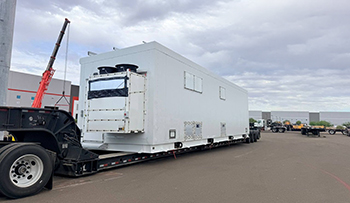
Discuss a Modular Building Move With Buchanan
If your company is planning modular building transport, prefab building shipping, or transportation of another large prefabricated structure, send Buchanan the shipment and project details for review. Buchanan can evaluate the dimensions, weight, equipment needs, route considerations, permits, site access, staging, and delivery sequence against its available heavy haul and specialized transportation capabilities.
Use Buchanan's Rate Quote page to provide the project information. Accurate dimensions, weights, addresses, loading methods, delivery requirements, and site details give the transportation team a stronger starting point for evaluating the move.
Have a modular building or prefabricated structure that needs transportation? Send the project details to Buchanan Hauling & Rigging for review.