
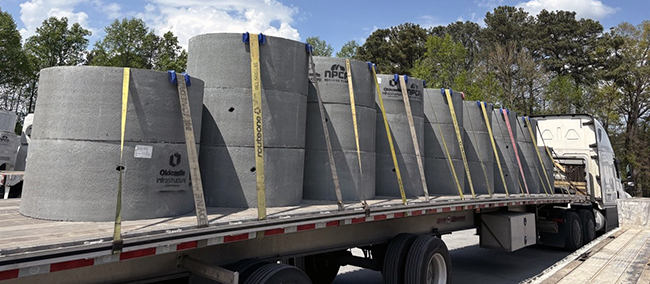
How contractors, precast manufacturers, fabricators, and project teams can plan transportation for beams, girders, panels, and other structural concrete components.
Precast concrete transport starts with the size, weight, support points, loading method, route, and delivery conditions for each component. Concrete beams, girders, wall panels, structural sections, and other precast products can be long, heavy, over-dimensional, or difficult to load with standard enclosed equipment. The transportation plan should be built around the actual component specifications rather than treating all precast freight the same.
Buchanan Hauling & Rigging, Inc. is an asset-based trucking company that supports construction materials, structural components, oversized freight, and project cargo through its flatbed transportation, specialized freight, and heavy haul transportation capabilities. Buchanan also identifies precast components among the construction materials it transports.
Why Precast Concrete Transportation Requires Detailed Load Information
Precast components are manufactured for a specific structural purpose, but the transportation plan depends on how the component will travel. Length, width, height, weight, lifting points, support locations, and orientation can all affect the trailer and route.
Before requesting equipment, shippers should confirm:
- Length, width, and height of each component
- Weight of each piece
- Total number of pieces or loads
- Approved lifting points
- Approved support or bearing points during transportation
- Required shipping orientation
- Loading and unloading methods
- Origin and destination access
- Requested delivery order
- Any project-specific handling or surface-protection requirements
For multi-load projects, the transportation team should receive a piece list that identifies which components belong on each shipment when possible. That helps connect trailer selection and scheduling with the order in which the project needs the freight.
Flatbed or Heavy Haul for Precast Concrete?
Some precast concrete freight can move on conventional open-deck equipment. Other components may require specialized or heavy haul configurations because of length, weight, height, or permit requirements.
Buchanan's flatbed operation supports construction materials and other freight that benefits from side, rear, or top loading. Standard flatbeds and step decks can fit many open-deck shipments when the dimensions and weight remain within the practical limits of that equipment.
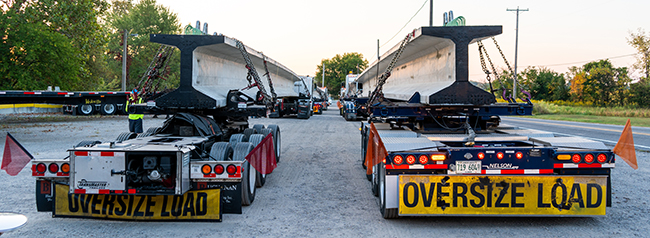
When concrete components become longer, heavier, wider, taller, or otherwise exceed standard transportation limits, Buchanan's Heavy Haul Division can review the shipment for specialized trailer configurations, permits, routing, escorts, and other project requirements. Buchanan publishes heavy haul equipment that includes extended configurations, lowboy and step deck equipment, multi-axle combinations, 12- and 13-axle RGNs, and equipment for long or unusually configured freight.
The shipment specifications should determine whether the freight belongs on standard flatbed equipment or needs a more specialized setup. Shippers should not select equipment based only on the name of the concrete product.
Concrete Beam and Girder Transport
Concrete beam transport and concrete girder transport often place additional emphasis on length, support locations, turning clearance, and jobsite access. A long structural component may fit within its weight plan but still require specialized equipment because of overall length or route geometry.
Before a long beam or girder moves, the transportation plan should review:
- Overall beam or girder length
- Individual piece weight
- Support locations specified for transportation
- Loaded height and width
- Trailer length and configuration
- Rear swing and turning requirements
- Route restrictions
- Unloading position at the project site
Buchanan's Heavy Haul page specifically identifies girders and other large construction components among the freight its team supports. Buchanan also publishes equipment for long freight, including extended configurations and pole-dolly options.
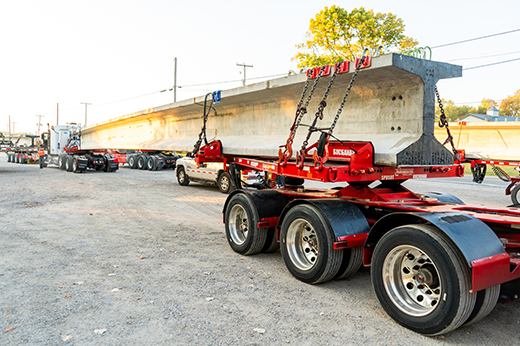
Precast Concrete Is a Different Search and Shipping Need Than Structural Steel
Buchanan already provides a separate resource on Structural Steel Transport. Steel beams, pipe, and fabricated steel often use the same open-deck transportation network as precast concrete, but the freight should not be treated as identical.
A precast component may have specific lifting points, required supports, shipping orientation, finished surfaces, embedded hardware, or project sequencing requirements that should be communicated before pickup. The transportation team should work from the manufacturer's or project engineer's handling information when it is available.
Keeping precast concrete transport separate from structural steel transport also helps project teams give the carrier the information that matters for the actual material being moved.
Loading and Unloading Precast Components
Many precast components are loaded and unloaded with cranes or other lifting equipment. The carrier should understand the planned loading method before the trailer arrives so the truck can be positioned correctly and the selected equipment fits the handling plan.
Confirm:
- Who will load the component. Identify the manufacturer, crane provider, rigging provider, or site team responsible for loading.
- Where the truck will be positioned. Confirm that the loading area has enough room for the tractor, trailer, lifting equipment, and personnel.
- How the component must be supported. Provide approved support-point or dunnage information when applicable.
- How unloading will occur. The destination should be ready for the trailer configuration and planned lift.
- Whether the delivery order matters. If pieces will be installed directly from the trailer, load and delivery sequencing become part of the transportation plan.
Buchanan's Heavy Haul capabilities include crane and rigging coordination when those requirements need to be integrated with the transportation project.
Permits and Route Planning for Oversized Precast Freight
Precast concrete transportation may require oversize or overweight permits when the loaded dimensions or weight exceed standard highway limits. Requirements vary by state and by shipment, so the route should be reviewed using the actual loaded configuration.
Route planning can involve:
- Bridge and roadway restrictions
- Overall height and overhead clearance
- Width restrictions
- Axle and gross-weight limits
- Construction zones
- Restricted travel periods
- Escort requirements
- Turning room at intersections
- Local access near the jobsite
Buchanan coordinates applicable permit requirements, route planning, route surveys, and escorts for heavy haul projects. For additional background, shippers can review Buchanan's Heavy Haul Permits and Route Planning article and U.S. Truck Weight Limits by State Reference Guide.
Jobsite Access and Delivery Position
Construction sites change throughout a project. A route that reaches the property does not automatically mean a long or heavy trailer can reach the planned unloading point.
Before delivery, review:
- Gate and entrance width
- Turning room for the tractor and trailer
- Temporary roads and ground conditions
- Overhead obstructions
- Crane location and lifting radius
- Truck staging area
- Other construction traffic
- Required delivery window
- Exit route after unloading
If a beam, girder, or panel will be lifted directly from the trailer into place, truck positioning and delivery timing should be coordinated with the crane and installation schedule before the shipment arrives.
Delivery Sequencing for Precast Projects
Large precast projects may involve many components moving from a manufacturing facility to one construction site. Transportation planning becomes more useful when it follows the erection or installation sequence instead of treating every truckload as an independent shipment.
Project teams should identify:
- The order in which components are needed
- How pieces are marked or numbered
- Which components can travel together
- When the site can accept each load
- Available staging space
- Crane and crew availability
- What happens if the project sequence changes
For recurring or multi-load work, sharing the expected volume and delivery schedule early can also help Buchanan review flatbed or specialized capacity before the project reaches the shipping stage.
Precast Concrete in Infrastructure and Construction Freight
Precast transportation often intersects with broader construction and infrastructure freight. Buchanan already maintains separate educational resources for Flatbed Freight for Infrastructure and construction equipment transportation. Those pages cover broader project and equipment needs, while this resource focuses on the transportation details specific to precast concrete components.
Depending on the project, precast transportation can involve flatbed freight for standard open-deck components, specialized transportation for over-dimensional pieces, or heavy haul service for long, oversized, or overweight structural freight.
How Buchanan Supports Precast Concrete Transport
Buchanan Hauling & Rigging has operated as an asset-based trucking company since 1996. Buchanan's flatbed operation transports construction materials and other open-deck freight, while its Heavy Haul Division supports girders, structural components, oversized construction freight, and other loads requiring specialized planning.
Buchanan's existing construction transportation content also identifies precast components among the materials the company transports. That makes precast freight a natural fit for review across Buchanan's flatbed, specialized, and heavy haul capabilities, depending on the specific component.
Because no two precast projects have the same piece list, Buchanan should evaluate the actual dimensions, weights, loading requirements, routes, and jobsite conditions before determining the equipment and transportation plan.
What to Provide for a Precast Concrete Transport Quote
Precast manufacturers, general contractors, infrastructure contractors, fabricators, and project teams can help Buchanan evaluate the freight by providing accurate shipment information at the start.
Include:
- Type of precast component
- Piece count
- Length, width, and height of each piece
- Weight of each piece
- Approved support and lifting information
- Required transportation orientation
- Origin and destination addresses
- Loading and unloading methods
- Requested pickup and delivery dates
- Required delivery sequence
- Jobsite access information
- Crane or rigging requirements
- Drawings or photographs when available
For project freight, also include the expected number of loads and the anticipated shipping schedule. If final weights or dimensions are still being confirmed, identify the preliminary figures so Buchanan knows which specifications still need to be finalized.
Plan Precast Transportation With Buchanan
If your business needs precast concrete transport, concrete beam transport, concrete girder transport, or transportation for other structural concrete components, Buchanan can review the shipment against its asset-based flatbed, specialized, and heavy haul capabilities.
Use Buchanan's Rate Quote page to provide the piece count, dimensions, weights, origin, destination, loading method, delivery sequence, and jobsite requirements. That information gives Buchanan's transportation team a better starting point for evaluating equipment and project needs.
Have precast beams, girders, panels, or other structural concrete freight to move? Send the shipment details to Buchanan Hauling & Rigging for review.