How rail operators, museums, contractors, manufacturers, and project teams can prepare locomotives, railcars, and other railroad equipment for over-the-road transportation.
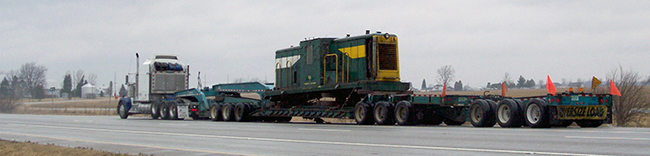
Rail equipment transport can become a specialized heavy haul project when a locomotive, railcar, historic train car, maintenance vehicle, or other railroad component needs to move by truck instead of traveling on active track. These moves can involve concentrated weight, unusual dimensions, limited ground clearance, specialized lifting or support requirements, and pickup or delivery locations that were not designed for highway trailers.
Buchanan Hauling & Rigging, Inc. is an asset-based trucking company with documented experience transporting rail equipment, including steam locomotives and train cars. Depending on the equipment, Buchanan can review a project through its Heavy Haul Trucking Services and Specialized Freight Transportation capabilities.
What Types of Rail Equipment May Move by Truck?
Rail equipment transportation can involve complete vehicles, historic equipment, maintenance machinery, or components that cannot move to the destination over an active rail network.
Examples may include:
- Steam locomotives
- Diesel locomotives
- Passenger or heritage railcars
- Industrial railcars
- Maintenance-of-way equipment
- Rail service machinery
- Locomotive or railcar components
- Wheel, truck, or undercarriage assemblies
- Museum and preservation equipment
- Other specialized railroad equipment
The transportation plan should be based on the exact equipment being moved. Two locomotives or railcars can have very different weights, dimensions, support requirements, and loading conditions.
Start With Confirmed Dimensions and Weight
Rail equipment can be both heavy and relatively long, so reliable measurements are important before trailer selection begins. The carrier needs the shipping dimensions and weight of the equipment in the configuration in which it will travel.
Provide:
- Overall length
- Overall width
- Overall height
- Total shipping weight
- Wheelbase or support-point information when relevant
- Center of gravity information when available
- Ground clearance
- Dimensions and weight of any removable components
- Drawings or equipment specifications
- Recent photographs from multiple angles
If the equipment is historic or documentation is incomplete, identify which specifications are confirmed and which remain estimates. Trailer selection, axle configuration, permits, and route planning should use the most reliable information available before the load moves.
Identify Approved Support and Lifting Points
Locomotives and railcars are designed to operate on rail, not to sit on highway trailers. The owner, manufacturer, preservation organization, rail operator, or qualified equipment specialist should provide any available information about approved lifting and support points.
Useful information can include:
- Approved crane lifting points
- Jacking locations
- Structural support locations
- Areas that should not carry transportation loads
- Center of gravity
- Wheel or truck assembly information
- Required transportation orientation
The transportation carrier should not be expected to determine preservation, structural, or manufacturer-specific handling requirements without supporting documentation. When equipment is historic or unusual, the project team should establish those requirements before loading.
Trailer Selection for Locomotive Transportation
Locomotive transportation often requires equipment designed for concentrated weight, low loaded height, or unusual load geometry. The correct trailer depends on the equipment's weight, dimensions, support locations, loading method, and route.
Buchanan's published heavy haul equipment includes:
- Lowboy and step deck equipment
- RGN configurations
- 12- and 13-axle RGNs
- Multi-axle combinations
- Extended trailer configurations
- Steerable equipment
- Jeeps and stingers
Additional axles may be needed when the freight weight must be distributed across a larger configuration. Lower-deck equipment can help control loaded height. Long combinations can create additional turning and route-planning requirements.
The equipment should be selected from the confirmed load profile rather than simply from the word "locomotive" or "railcar."
Railcar Transport Can Create Different Requirements
A railcar may be lighter than a locomotive but still create substantial length, width, height, or support challenges. Historic passenger cars, specialty railcars, and other train cars can also have delicate exterior components or preservation requirements that affect loading and transportation.
Before railcar transport, confirm:
- Carbody length and width
- Overall shipping height
- Total weight
- Whether wheel or truck assemblies remain installed
- Approved support points
- Loading and unloading method
- Whether exterior components will be removed or secured
- Site access at both ends
A long railcar can create turning issues even when its weight is manageable. The transportation plan should consider the complete tractor, trailer, and load combination.
Loading Rail Equipment Onto a Highway Trailer
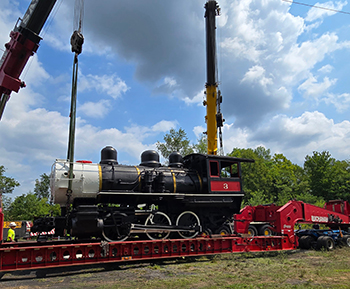
Loading can be one of the most important parts of rail equipment transportation. Depending on the equipment and site, a project may involve cranes, jacking systems, specialized rigging, temporary track arrangements, or another engineered loading method.
Before the carrier arrives, the project team should establish:
- How the equipment will leave the rail or storage position. Identify the planned lifting, jacking, or transfer method.
- Who is responsible for the lift or transfer. Confirm the crane, rigging, rail, museum, or project contractor involved.
- Where the highway trailer will be positioned. Verify that the site provides enough room for the tractor, trailer, lifting equipment, and personnel.
- How the rail equipment will be supported. Use approved project or equipment information for support locations.
- How unloading will occur. The destination should be prepared for the trailer configuration and transfer method before the load departs.
Buchanan's Heavy Haul operation can review crane and rigging coordination when those services need to be integrated with the transportation project.
Trackside and Rail Facility Access Matter
Rail equipment often begins or ends at a location where highway-trailer access is limited. A locomotive may be in a rail yard, museum, industrial siding, restoration facility, or storage location where the selected heavy haul combination needs enough room to enter, position, load, and leave.
Review:
- Road access to the rail facility
- Gate width
- Turning room
- Surface and ground conditions
- Track crossings
- Overhead wires or structures
- Space beside the rail equipment
- Crane or lifting-equipment position
- Trailer staging room
- Exit route after loading
The same review should be completed at the destination. A museum or restoration site may have different access limits than an industrial facility or rail yard.
Loaded Height Can Become a Major Route Constraint
A locomotive or railcar can create substantial overall height once placed on a trailer. Trailer deck height therefore becomes part of the route-planning process.
The transportation team may need to evaluate:
- Bridges
- Overpasses
- Utility lines
- Traffic signals
- Signs
- Tree clearance
- Railroad crossings
- Construction zones
- Local streets near the origin and destination
Reducing trailer deck height can help in some situations, but the final equipment configuration still has to satisfy weight distribution, support, loading, and ground-clearance requirements.
Oversize and Overweight Permits for Rail Equipment
Locomotive hauling and railcar transportation may require oversize or overweight permits when the loaded dimensions or weight exceed legal highway limits. Requirements vary by state and by the final tractor-trailer configuration.
Permit planning can involve:
- Overall loaded width
- Overall loaded height
- Total combination length
- Gross weight
- Axle weights
- Approved travel routes
- Travel-time restrictions
- Escort or pilot-vehicle requirements
- Additional local requirements
Buchanan coordinates applicable permit requirements, route planning, route surveys, and escorts for qualifying heavy haul projects. For more detail, review Buchanan's Heavy Haul Permits and Route Planning resource and U.S. Truck Weight Limits by State Reference Guide.
Turning Geometry Is Important for Long Rail Equipment
Railcars and some locomotive-trailer combinations can be long enough that turning geometry becomes a key part of route planning. The route needs to accommodate the complete combination, not only the width of the cargo.
Potential concerns include:
- Tight intersections
- Roundabouts
- Narrow access roads
- Raised medians
- Roadside signs
- Utility poles
- Parked vehicles
- Restricted entrances
- Rear swing or trailer tracking
For unusual or oversized configurations, route surveys can help identify restrictions before the load reaches them.
Historic Rail Equipment Needs Project-Specific Handling
Historic locomotives and railcars may have preservation requirements beyond normal freight transportation. The museum, owner, restoration contractor, or preservation specialist should identify any restrictions related to lifting, exterior components, structural support, or handling.
The carrier's transportation plan should then account for those requirements when selecting equipment, positioning the trailer, coordinating loading, and planning the route.
This is especially important when an artifact cannot be treated like newly manufactured industrial machinery. The owner or preservation team should define which parts of the equipment can support transportation loads and what must be protected or removed.
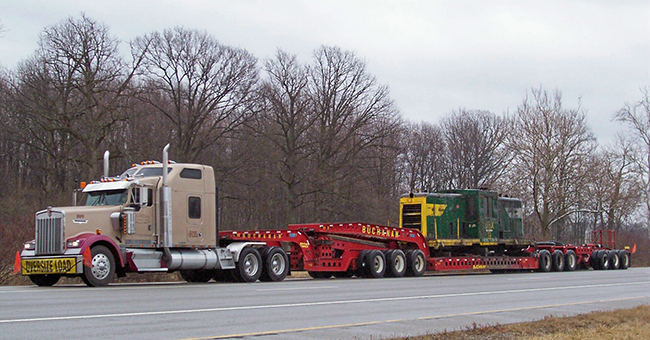
Buchanan's Documented Steam Locomotive Experience
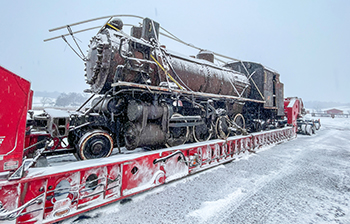
Buchanan has published first-party examples of locomotive transportation. In January 2024, Buchanan Heavy Haul delivered a historic steam locomotive from Pennsylvania to the Age of Steam Roundhouse Museum in Sugarcreek, Ohio. Buchanan's project page identifies the move as a heavy haul delivery using specialized equipment and an experienced project team.
Shippers can view the project on Buchanan's Delivering a Steam Locomotive to Age of Steam page.
Buchanan published another Steam Locomotive in Transit project in May 2024, providing additional first-party evidence of rail equipment transportation experience.
Buchanan's 2026 Pufferbelly Train Car Move
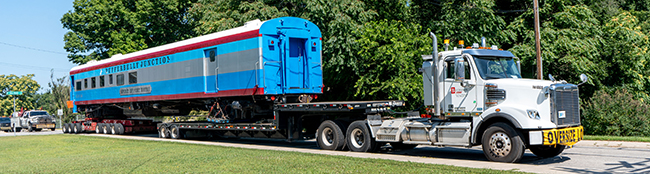
Buchanan's current video portfolio also documents a Pufferbelly train car move completed in 2026. The project transported the train car from downtown Fort Wayne to Pleasant Lake, Indiana.
That project broadens Buchanan's documented rail experience beyond locomotives and shows that train-car transportation can require the same core planning disciplines used for other unusual heavy haul freight: equipment selection, loading coordination, route review, site access, and delivery planning.
More completed projects are available through Buchanan's Transportation Video Gallery and Transportation Project Gallery.
Rail Equipment Transport Is Different From Rail Freight Service
This type of transportation should not be confused with shipping ordinary freight by railroad. Rail equipment transport refers to moving the locomotive, railcar, maintenance machine, or railroad component itself, often by highway trailer.
The service is most relevant when rail equipment:
- Cannot reach the destination over active track
- Needs to move between disconnected rail locations
- Is being delivered to a museum or restoration site
- Is moving to or from a maintenance or fabrication facility
- Is no longer operating under its own rail movement
- Requires a highway segment as part of a larger project
The specific reason for highway transportation should be discussed during project planning because it can affect loading access and destination requirements.
What to Provide for a Rail Equipment Transport Quote
Rail operators, museums, preservation organizations, contractors, manufacturers, industrial facilities, equipment owners, and project managers can help Buchanan evaluate a rail equipment move by providing detailed freight and site information.
Include:
- Equipment type
- Manufacturer, model, or equipment identification when available
- Overall shipping length, width, and height
- Total shipping weight
- Wheelbase or support information when applicable
- Center of gravity information when available
- Approved lifting and support information
- Origin and destination addresses
- Requested pickup and delivery dates
- Loading and unloading methods
- Rail-yard, museum, or facility access information
- Crane or rigging requirements
- Photos and drawings
- Known preservation or handling requirements
If any dimensions, weights, or loading details are preliminary, identify them as estimates. Historic equipment should also include any available documentation from the owner, museum, restoration team, or equipment specialist.
Plan a Rail Equipment Move With Buchanan
If your organization needs rail equipment transport, locomotive transportation, railcar transport, train car transport, or highway transportation for other railroad equipment, Buchanan can review the project against its asset-based Heavy Haul and specialized transportation capabilities.
Use Buchanan's Rate Quote page to provide the equipment description, dimensions, weight, origin, destination, loading method, requested schedule, and site-access information.
Have a locomotive, railcar, historic train car, or other railroad equipment that needs highway transportation? Send the project details to Buchanan Hauling & Rigging for review.