
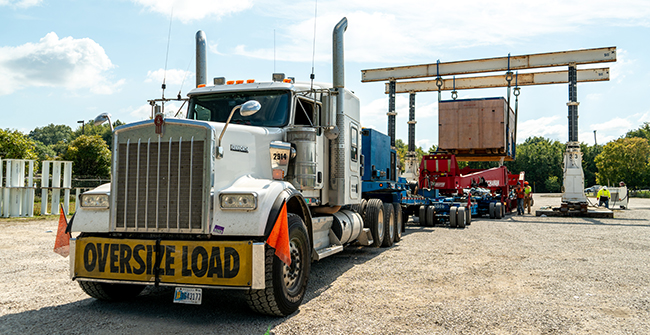
What shippers should confirm before heavy haul equipment is assigned, permits are requested, and pickup is scheduled.
A heavy haul shipment usually becomes easier to evaluate when the carrier receives complete information before the load is scheduled. Dimensions, weight, loading method, site access, timing, photos, and equipment details can all affect trailer selection, routing, permit requirements, and the pickup plan.
This heavy haul shipping checklist is designed for manufacturers, contractors, equipment dealers, plant managers, project teams, and other businesses preparing oversized or overweight freight for transportation. Buchanan Hauling & Rigging, Inc. uses shipment-specific information to review equipment, routing, permits, pickup conditions, and delivery requirements through its Heavy Haul Trucking Services.
Heavy Haul Checklist: Start With the Freight
The first step is identifying exactly what will move. A general description such as "machine," "tank," or "construction equipment" is useful, but it is not enough to select heavy haul equipment or evaluate permit requirements.
Provide:
- Equipment or commodity name
- Manufacturer and model when available
- Quantity of pieces
- Photos from several angles
- Equipment drawings or specification sheets when available
- Information about removable attachments or components
- Any manufacturer transportation instructions
For used machinery or equipment purchased at auction, do not assume the published specifications match the exact shipping configuration. Attachments, guards, platforms, counterweights, buckets, booms, tires, or other components can change the final dimensions and weight.
1. Confirm the Shipping Dimensions
Heavy haul shipment planning should use the dimensions of the freight as it will actually be transported. The carrier needs the shipping length, width, and height, not only the dimensions listed in a sales brochure or equipment catalog.
Confirm:
- Overall length
- Overall width
- Overall height
- Ground clearance
- Dimensions of separate pieces if the equipment will be disassembled
- Dimensions of attachments that will remain installed
Loaded dimensions can affect trailer selection, permits, clearances, escorts, and route options. A change of several inches can matter when the load is already close to a legal or permit threshold.
Measure the freight after its transportation configuration is known. If a component will be removed before pickup, note that clearly and provide the dimensions of both the main unit and the separate component.
2. Verify the Weight
Weight affects trailer capacity, axle configuration, permit requirements, and route planning. Shippers should provide the most reliable weight available rather than using an estimate when a verified figure can be obtained.
Useful weight information includes:
- Total shipping weight
- Weight of individual pieces
- Weight by section when equipment will be disassembled
- Center of gravity information when available
- Manufacturer weight documents when available
If the weight is still preliminary, identify it as an estimate. A transportation plan based on an estimated weight may need to be revised when the final figure is confirmed.
For general planning information, Buchanan maintains a U.S. Truck Weight Limits by State Reference Guide. Actual heavy haul requirements still depend on the specific load, trailer configuration, route, and jurisdictions involved.
3. Explain How the Freight Will Be Loaded
The carrier needs to know the loading method before assigning equipment. A trailer that works for a drive-on machine may not be the best choice for freight that must be crane-loaded or positioned from above.
Identify whether loading will involve:
- Drive-on loading
- Crane loading
- Forklift loading
- Rigging systems
- Jacking or skidding
- Another project-specific method
Also identify who is responsible for loading and whether the carrier needs to coordinate with a crane or rigging provider. Buchanan's Heavy Haul team can review crane and rigging coordination when those services need to be integrated with the transportation plan.
4. Confirm the Unloading Plan
The destination needs to be ready for the trailer configuration and the planned unloading method. A successful pickup plan does not help if the receiving site cannot unload the equipment when the truck arrives.
Confirm:
- Who will unload the freight
- What unloading equipment will be available
- Where the trailer will be positioned
- Whether a crane, forklift, or rigging crew is scheduled
- Whether the freight will be placed directly into position or staged nearby
- Any delivery appointment or site-hour restrictions
If the unloading method differs from the loading method, tell the carrier before the equipment is selected.
5. Review Origin Site Access
Heavy equipment may be ready to ship but difficult to reach with the tractor and trailer required for the load. Review the pickup site before dispatch, especially when the freight is inside a plant, construction area, storage yard, or other location with limited maneuvering room.
Check:
- Gate and entrance width
- Turning room
- Overhead clearances
- Door openings
- Road and pavement conditions
- Available staging space
- Loading position
- Security and check-in requirements
- Facility operating hours
Current photos or a site map can help the transportation team understand the approach before the truck arrives.
6. Review Destination Access
The same access review should be completed at the delivery location. Oversized freight may be able to reach the property but still have difficulty reaching the final unloading point.
Review:
- Final turn into the property
- Gate width and entrance angle
- Temporary roads or construction areas
- Soft or uneven ground
- Overhead lines, structures, or signs
- Available staging space
- Crane or unloading location
- Exit route after unloading
This is especially important for construction sites, plants, utilities, infrastructure projects, and industrial facilities where access conditions can change as work progresses.
7. Provide Complete Origin and Destination Information
A city and state are useful for an early conversation, but heavy haul shipment planning eventually requires the actual origin and destination. Route evaluation depends on where the load enters and leaves public roads, not simply the nearest city.
Provide:
- Full pickup address
- Full delivery address
- Site contact information
- Pickup hours
- Delivery hours
- Appointment requirements
- Known access restrictions
If the site does not have a conventional street address, provide coordinates, maps, written directions, or other location information that can help define the actual pickup or delivery point.
8. Identify the Requested Schedule
Heavy haul transportation can involve equipment selection, permits, route review, escorts, site coordination, and other steps that standard freight may not require. Give the carrier the requested dates as early as possible.
Provide:
- Earliest pickup date
- Required delivery date
- Whether the schedule is firm or flexible
- Facility shutdown windows
- Crane or crew availability
- Project milestones tied to the shipment
Do not base the pickup date only on when the project wants the freight to leave. Confirm when the equipment will actually be ready, accessible, and cleared for loading.
9. Identify Known Oversize or Overweight Conditions
The carrier will evaluate permit and route requirements, but the shipper can help by identifying known conditions early. If the equipment is unusually tall, wide, long, or heavy, mention that before the quote or pickup process advances.
Do not assume a previous route or permit will apply to a new shipment. Requirements can vary based on the loaded dimensions, weight, axle configuration, route, construction activity, and state permit conditions.
Buchanan's Heavy Haul Permits and Route Planning resource explains how bridge clearances, roadway restrictions, state requirements, escorts, and approved routes can affect oversized freight. A separate Oversized Freight Route Planning guide goes deeper into route-specific considerations.
10. Document Loose, Removable, and Separate Components
Heavy machinery and industrial equipment may ship with attachments, spare parts, accessories, or loose components. These items need to be identified before loading.
For each separate component, provide:
- Description
- Dimensions
- Weight when known
- Whether it will travel on the same trailer
- Whether separate loading equipment is needed
- Any special handling information
Do not assume small components can simply be added after the primary load has been planned. Extra pieces can affect available deck space, securement, weight distribution, and the final transportation configuration.
11. Share Photos and Drawings
Photos are useful because they show details that may not appear in a spreadsheet. For heavy equipment, machinery, tanks, presses, vessels, fabricated structures, and other project freight, send clear images of the actual item whenever possible.
Helpful images include:
- Full side views
- Front and rear views
- Top or elevated views when available
- Loading points
- Underside or ground-clearance areas
- Attachments and protrusions
- Pickup entrance
- Delivery entrance
- Loading and unloading areas
Engineering drawings, equipment specification sheets, and manufacturer transportation documents can provide additional information when the freight is complex.
12. Confirm Special Site or Project Requirements
Some heavy haul loads are part of a larger project rather than a single pickup and delivery. Tell the carrier about project conditions that could affect transportation.
Examples include:
- Multiple related loads
- Required delivery sequence
- Limited onsite storage
- Crane schedules
- Construction phases
- Shutdown periods
- Security requirements
- Restricted site hours
- Temporary roads or entrances
For multi-load projects, provide the expected number of shipments and anticipated schedule. Early visibility can help the transportation team review equipment and capacity requirements.
13. Tell the Carrier When Something Changes
Dimensions, weight, schedule, loading method, and site conditions can change between the first quote request and pickup. Those changes should be communicated before dispatch.
Examples that may require the transportation plan to be reviewed include:
- A component will no longer be removed
- The final weight is higher than the estimate
- The pickup address changed
- The destination entrance changed
- The crane schedule moved
- The freight will be loaded differently
- A new attachment increases the width or height
Heavy haul planning is based on the shipment information provided. When that information changes, equipment, permit, route, or schedule decisions may also need to change.
Quick Heavy Haul Shipping Checklist
Before requesting final transportation planning, make sure you can answer these questions:
- What exactly is being transported?
- What are the confirmed shipping dimensions?
- What is the confirmed weight?
- Are there separate pieces or attachments?
- How will the freight be loaded?
- How will it be unloaded?
- What are the exact pickup and delivery addresses?
- Can the required tractor and trailer access both sites?
- What pickup and delivery dates are required?
- Are photos, drawings, or specifications available?
- Are there known oversize or overweight conditions?
- Are there project sequencing or staging requirements?
If several answers are still unknown, gather them before the shipment reaches the final scheduling stage. The more accurate the initial information, the better the carrier can evaluate the move.
How Buchanan Reviews Heavy Haul Freight
Buchanan Hauling & Rigging has provided asset-based freight transportation since 1996. Its Heavy Haul Division supports oversized and overweight industrial machinery, construction equipment, tanks, presses, power-generation equipment, structural components, and other large or unusually configured freight.
Buchanan's Heavy Haul team reviews equipment selection, load securement, permits, route planning, escorts when required, pickup conditions, delivery requirements, and communication throughout the transportation process. Each load is evaluated according to its actual specifications rather than applying one trailer or route to every shipment.
Businesses can also view real examples of Buchanan transportation projects in the Buchanan Hauling Transportation Project Gallery.
What to Send Buchanan for a Heavy Haul Review
When your business is ready to have Buchanan evaluate an oversized or overweight shipment, send the information that is available and clearly identify anything that is still preliminary.
A strong starting package includes:
- Freight description
- Confirmed or estimated dimensions
- Confirmed or estimated weight
- Origin and destination
- Requested pickup and delivery dates
- Loading and unloading methods
- Site access information
- Photos and drawings
- Separate-component information
- Known project or scheduling requirements
Use Buchanan's Rate Quote page to submit shipment details for review. The Rate Quote page is the site's primary destination for freight pricing and heavy haul quote requests.
Have oversized, overweight, or unusually configured freight to move? Send the load details to Buchanan Hauling & Rigging for review.