
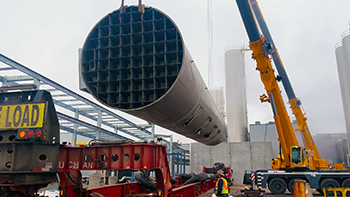
How food manufacturers, equipment suppliers, contractors, and plant teams can prepare processing machinery, tanks, production equipment, and related freight for transportation.
Food processing equipment transport can involve more than moving a machine from one address to another. Processing machinery may be tall, heavy, skid-mounted, stainless steel, connected to production lines, or designed with specific lifting and support points. The move may also need to fit a plant shutdown, equipment installation schedule, crane window, or facility access plan.
Buchanan Hauling & Rigging, Inc. is an asset-based trucking company that transports industrial machinery, processing equipment, tanks, manufacturing equipment, and other specialized freight. Depending on the shipment, Buchanan can review food processing machinery for flatbed transportation, specialized freight transportation, or heavy haul transportation.
What Types of Food Processing Equipment May Need Transportation?
Food manufacturing facilities use many types of machinery, and each piece can create a different transportation profile. Some equipment may fit conventional open-deck transportation, while larger or heavier machines may need low-deck, RGN, multi-axle, or other specialized configurations.
Food processing and packaging equipment may include:
- Mixers and blenders
- Ovens, cookers, and thermal-processing equipment
- Filling and bottling equipment
- Packaging machinery
- Conveyors and material-handling equipment
- Stainless steel tanks and vessels
- Pumps and processing skids
- Washdown or sanitation-system equipment
- Sorting and inspection machinery
- Production-line support equipment
- Other food manufacturing machinery
The equipment name alone is not enough to choose a trailer. The carrier needs the actual shipping dimensions, weight, loading method, support information, pickup conditions, and destination requirements.
Start With the Final Shipping Configuration
Food processing machinery is not always transported in the same configuration in which it operates. Guards, conveyors, platforms, piping, controls, hoppers, access stairs, motors, or other components may be removed before transportation.
Confirm the equipment as it will actually be presented for pickup:
- Overall shipping length
- Overall shipping width
- Overall shipping height
- Total shipping weight
- Ground clearance
- Separate components
- Protrusions that remain attached
- Required transportation orientation
- Center of gravity information when available
If the equipment will be partially disassembled, provide dimensions and weights for each separate piece. A machine that fits a trailer after disassembly may have very different transportation requirements if components remain attached.
Verify Equipment Weight Before Trailer Selection
Processing machinery can place substantial weight within a relatively compact footprint. Trailer capacity is only part of the evaluation. Weight distribution, axle configuration, support locations, loaded height, and route requirements may also affect the equipment selected for the move.
Provide the most reliable weight information available, including:
- Total shipping weight
- Weight of separate components
- Weight by section when applicable
- Center of gravity information
- Manufacturer specification sheets
- Equipment drawings when available
If the weight is still an estimate, identify it as preliminary. The transportation plan may need to be revised when the final shipping weight is confirmed.
Follow Manufacturer and Plant Handling Requirements
Food processing equipment can have manufacturer-specific instructions for lifting, supporting, disconnecting, protecting, or transporting the machine. The equipment owner, manufacturer, plant engineering team, installer, or qualified machinery contractor should define those requirements before loading.
Useful information can include:
- Approved lifting points
- Forklift pockets or lifting locations
- Approved support points
- Required shipping orientation
- Components that must be removed or secured
- Protection requirements for controls or exposed parts
- Manufacturer transportation drawings
The transportation carrier should not be expected to determine machine-specific decommissioning, sanitation, internal preparation, or installation procedures. Those responsibilities should be established by the equipment owner and qualified plant or equipment specialists before the freight is offered for transportation.
Plant Sanitation Requirements Should Be Defined Before Pickup
Food plants can have sanitation, access, and equipment-handling procedures that differ from other manufacturing facilities. Those requirements may affect when a truck can enter the property, where equipment can be staged, and how a trailer can be positioned near the loading area.
Before pickup or delivery, the plant team should communicate applicable site requirements such as:
- Approved truck entrances
- Restricted plant areas
- Driver check-in procedures
- Trailer or equipment cleanliness requirements
- Protective-equipment rules for visitors
- Washdown or sanitation-zone restrictions
- Loading-area access requirements
- Scheduled shutdown or maintenance windows
These requirements should come from the facility. The carrier then needs enough information to determine whether the planned tractor, trailer, driver access, and loading position fit the site rules.
Choose the Trailer Around the Equipment
There is no single trailer used for every piece of food processing machinery. Equipment selection should follow the dimensions, weight, ground clearance, loading method, and route.
Possible transportation equipment may include:
- Flatbed trailers for machinery that fits conventional open-deck dimensions and weight
- Step deck trailers when lower deck height is useful
- Lowboy equipment for taller or heavier machinery
- RGN trailers when low deck height or loading configuration fits the equipment
- Extended trailers for long processing systems or structural components
- Multi-axle configurations for heavier equipment
Buchanan's published Heavy Haul equipment includes step decks, lowboys, specialized RGNs, 12- and 13-axle configurations, extended trailers, steerable equipment, jeeps, and stingers. The actual equipment assigned to a food processing machinery move depends on the shipment requirements and current capacity.
Flatbed Transportation for Processing Machinery
Food machinery that fits standard open-deck dimensions and weight may move on a flatbed or step deck. Open-deck equipment can be useful when machinery needs to be loaded from the side or above by crane or forklift.
Examples may include:
- Packaged processing machinery
- Conveyor sections
- Processing skids
- Fabricated stainless components
- Equipment frames
- Production-line modules
Buchanan's Flatbed Trucking Services support manufacturing and industrial freight throughout the United States. Larger, taller, heavier, or over-dimensional equipment can be reviewed through Buchanan's specialized or Heavy Haul operations.
Heavy Haul for Large Food Processing Equipment
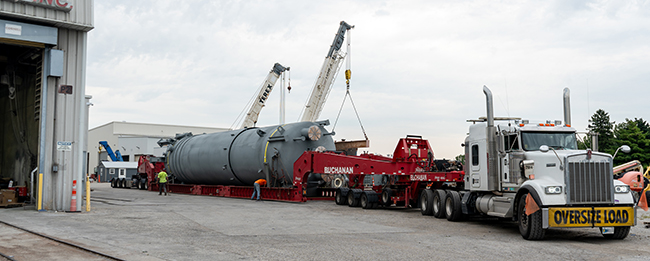
Food processing equipment becomes a heavy haul project when the machine or loaded combination exceeds standard size or weight limits or requires a trailer configuration beyond conventional flatbed equipment.
Heavy haul planning may need to address:
- Loaded height
- Overall width
- Total combination length
- Gross and axle weights
- Weight distribution
- Loading and support points
- Permit requirements
- Route restrictions
- Plant access
Buchanan's Heavy Haul Division supports industrial machinery, processing equipment, tanks, presses, and other oversized or overweight freight. Each load is reviewed around the actual equipment rather than assuming one trailer fits every processing machine.
Loading Method Should Be Confirmed Before Dispatch
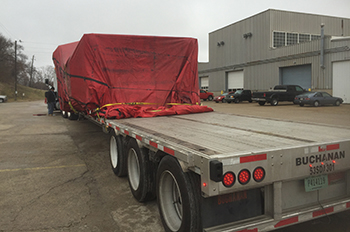
Food processing machinery may be crane-loaded, forklift-loaded, moved with rigging systems, skidded, or transferred using another project-specific method. The carrier needs to know how the equipment will reach the trailer before assigning transportation equipment.
Confirm:
- Who will prepare the machine for loading. Identify the plant, equipment supplier, millwright, machinery mover, or contractor responsible.
- How the equipment will be lifted or transferred. Provide the crane, forklift, rigging, or other planned method.
- Where the trailer will be positioned. Verify that the truck can reach the loading location.
- How the equipment will be supported. Use manufacturer or project information when support locations are specified.
- How unloading will occur. Confirm that the destination has the necessary equipment, personnel, and space.
When crane or rigging coordination needs to be integrated with a qualifying heavy haul move, Buchanan can review those requirements as part of the transportation plan.
Stainless Steel Tanks and Process Vessels
Food manufacturing facilities may use stainless steel tanks, process vessels, silos, and other cylindrical equipment. Those pieces can create different transportation requirements than compact machinery because their diameter and height may determine the loaded profile.
Before transporting a tank or vessel, provide:
- Overall length or height in shipping orientation
- Diameter
- Total weight
- Support or saddle information
- Approved lifting points
- Required transportation orientation
- Attached piping, legs, platforms, or fittings
- Loading and unloading method
For larger vessel-specific moves, Buchanan's Pressure Vessel Transport resource provides additional information about cylindrical industrial freight, trailer selection, loading, routing, and site access.
Buchanan Has Documented Food-Industry Heavy Haul Experience
Buchanan's current Specialized and Heavy Haul Transport article includes a first-party project image identified as Buchanan Heavy Haul moving a liquid tank headed to a food processing company.
The published example does not identify the customer, route, tank dimensions, or transportation configuration, so those details should not be assumed. It does provide direct evidence that Buchanan has transported heavy industrial freight for a food-processing application.
Shippers can view that example in Buchanan's Specialized and Heavy Haul Transport article and browse other completed work in the Buchanan Hauling Transportation Project Gallery.
Plant Shutdowns Can Affect Transportation Timing
Food processing equipment moves are often tied to maintenance windows, facility expansions, line replacements, or production changes. If machinery must be removed or installed during a scheduled shutdown, transportation needs to match the work occurring before and after the truck moves.
Provide the carrier with:
- Equipment release date
- Required pickup window
- Plant shutdown dates
- Required delivery date
- Crane or rigging schedule
- Installation timing
- Facility receiving hours
- Any restart milestone tied to the equipment
If the equipment is not ready when expected, update the transportation team before dispatch. A trailer scheduled around one loading window may need to be reassigned or rescheduled when plant work changes.
Multi-Machine Projects Need Delivery Sequencing
A plant expansion or production-line change may involve several pieces of food processing equipment rather than one machine. Those shipments should be connected to the installation sequence.
A multi-load plan can identify:
- Equipment or asset number
- Machine description
- Assigned trailer type
- Pickup sequence
- Delivery sequence
- Crane or rigging window
- Installation location
- Required arrival date
Buchanan's Production Line Equipment Transport article provides a broader framework for multi-machine plant moves and production-line relocation projects.
Plant Access Can Determine Whether the Trailer Plan Works
Processing plants can have narrow service roads, controlled entrances, overhead piping, security procedures, limited staging, or loading areas located deep inside the property. The transportation plan needs to account for the complete path from the public road to the loading or unloading position.
Review:
- Gate width
- Entrance angle
- Turning room
- Road width
- Overhead piping or structures
- Building-door dimensions
- Internal traffic patterns
- Trailer staging areas
- Crane or forklift positioning
- Exit route
Current photos and marked site plans can help identify conditions that are difficult to understand from a street address alone.
Oversized Equipment May Require Permits and Route Planning
When food processing machinery exceeds standard highway size or weight limits, transportation may require oversize or overweight permits. Permit and route requirements depend on the final loaded dimensions, trailer configuration, axle weights, route, and jurisdictions involved.
Route planning can involve:
- Bridge restrictions
- Overhead clearances
- Roadway width
- Construction zones
- Travel-time restrictions
- Escort requirements
- Turning geometry
- Final plant access
Buchanan coordinates applicable oversize and overweight permits, route planning, route surveys, and escort requirements for qualifying heavy haul projects. Buchanan's Heavy Haul Permits and Route Planning guide provides more detail on that process.
Protect Controls and Sensitive Components
Food processing machinery can include control cabinets, sensors, motors, wiring, piping, guards, instrument panels, and other components that may need protection or removal before transportation.
The machine owner, equipment supplier, or qualified technician should identify:
- Components that will remain installed
- Components that will be removed
- Separate crates or accessory loads
- Required protection for controls or exposed parts
- Manufacturer handling instructions
- Any restrictions on lifting, blocking, or supporting the machine
The final transportation dimensions should include anything that remains attached. Separate components should also be included in the shipment information so trailer space and load count can be evaluated correctly.
Used Equipment and Auction Purchases Need Extra Verification
Used food processing equipment may be purchased from a closed facility, equipment dealer, auction, or another manufacturer. In those situations, published specifications may not match the machine's current configuration.
Before requesting transportation:
- Measure the actual equipment
- Verify the current weight when possible
- Photograph all sides
- Identify missing or added components
- Confirm how the machine will be removed from the facility
- Determine who will load it
- Review access around the machine and building
A catalog specification is useful, but the carrier needs information about the actual unit being transported.
What to Provide for a Food Processing Equipment Transport Quote
Food manufacturers, equipment dealers, machinery suppliers, plant managers, engineering firms, contractors, and installation teams can help Buchanan evaluate a move by providing complete equipment and site information.
Include:
- Equipment type
- Manufacturer and model when available
- Shipping length, width, and height
- Total shipping weight
- Ground clearance
- Center of gravity information when available
- Approved lifting or support information
- Origin and destination addresses
- Requested pickup and delivery dates
- Loading and unloading methods
- Plant access requirements
- Separate components or accessories
- Crane or rigging requirements
- Photos, drawings, or specification sheets
- Any shutdown or installation dates affecting transportation
If several machines are moving as part of one plant project, also provide the expected load count and required delivery sequence.
Plan Food Processing Equipment Transportation With Buchanan
If your company needs food processing equipment transport, food machinery transport, stainless tank transport, or transportation for other processing and packaging equipment, Buchanan can review the shipment against its asset-based flatbed, specialized, and heavy haul capabilities.
Use Buchanan's Rate Quote page to provide the machine description, dimensions, weight, origin, destination, loading method, requested dates, and plant-access information.
Have processing machinery, stainless equipment, tanks, or production-line equipment that needs transportation? Send the shipment details to Buchanan Hauling & Rigging for review.